A dedicated workout corner can make exercise more convenient without requiring a full home gym. With a small amount of space, a few useful pieces of equipment, and a simple plan, you can create an area that supports stretching, strength exercises, mobility work, and light cardio.
The goal is not to fill a room with machines. It is to build a comfortable, organized space that encourages you to move regularly.
Choose the Right Location
Start by looking for an area that is easy to access. A spare room is useful, but it is not required. You can create a workout corner in a bedroom, living room, home office, basement, or even part of a hallway with enough open floor space.
Consider these factors when choosing your location:
– Available floor space: You should be able to stand, stretch, and move your arms without hitting nearby furniture.
– Flooring: A firm, level surface is important for balance and comfort.
– Lighting: Natural light can make the space feel more inviting, while a bright lamp can help in darker areas.
– Ventilation: Fresh air or a nearby fan can make workouts more comfortable.
– Privacy: Choose a spot where you can focus without frequent interruptions.
– Storage: Keep equipment nearby so setting up does not become a chore.
Before buying anything, measure the area. Mark the usable floor space with painter’s tape if you are unsure whether it is large enough. This simple step can help you avoid overcrowding the room.
Keep the Layout Simple
A practical workout corner usually needs three zones:
- **Movement zone:** The open area where you perform exercises.
- **Equipment zone:** A shelf, basket, or cabinet for storing accessories.
- **Recovery zone:** A small space for stretching, breathing exercises, or cooling down.
The movement zone should remain clear. Avoid placing heavy furniture where you may trip over it. If your workout corner shares space with another room, use a mat, small rug, or change in wall color to visually define the area.
A mirror can also help the corner feel larger and allow you to check your posture during basic movements. However, it is optional. A clear, safe floor is more important than decorative additions.
Start With Essential Equipment
You do not need a large collection of equipment to get started. Choose versatile items that support several types of exercise.
Exercise Mat
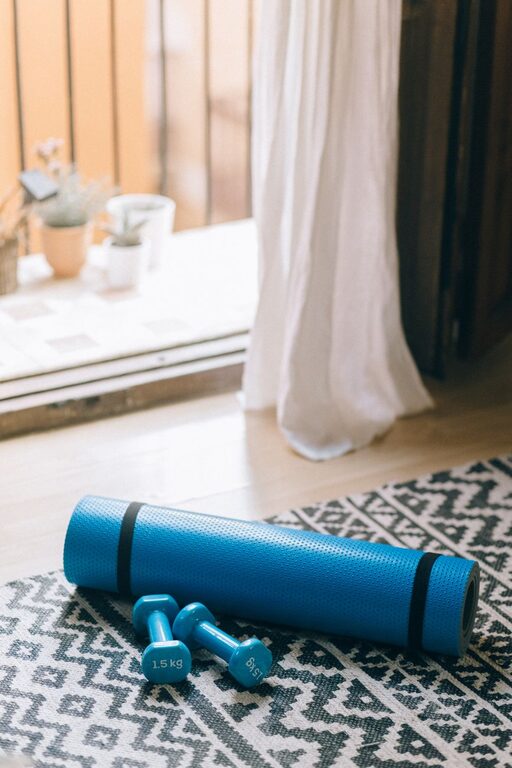
An exercise mat provides cushioning for floor-based movements and helps define your workout area. Look for a mat that is long enough for your body and thick enough to feel comfortable on your floor.
A non-slip surface is helpful, especially during stretching or exercises that involve changing positions. Store the mat rolled up or hang it on a wall hook when you are finished.
Resistance Bands
Resistance bands are lightweight, affordable, and easy to store. They can be used for gentle strength exercises, warmups, and mobility work.
Consider getting a small set with different resistance levels. A set with handles may be useful for pulling movements, while loop bands can work well for lower-body exercises.
Dumbbells
A pair of dumbbells can add resistance to many simple exercises. If you are new to strength training, start with a manageable weight that allows controlled movement.
Adjustable dumbbells are useful when storage space is limited. If you prefer fixed weights, choose one or two pairs that fit your current routine rather than buying a large collection at once.
Stability or Exercise Ball
An exercise ball can support balance exercises, stretching, and selected strength movements. It can also serve as an alternative seat in some parts of the home.
Because exercise balls are large, make sure you have a suitable place to store them. Keep them away from sharp edges and objects that could damage the surface.
Optional Cardio Equipment
If you enjoy cardio workouts, you might add a jump rope, step platform, or compact pedal exerciser. Choose only equipment that suits your space and interests.
A jump rope requires a higher ceiling and enough clearance around your body. A step platform should be stable and placed on a level surface. Always check the area before using equipment that involves repeated movement.
Make Safety a Priority
A workout corner should be convenient, but safety comes first. Keep walkways clear and place equipment where it will not fall or create a tripping hazard.
Use these basic safety practices:
– Check that mats and equipment are in good condition.
– Keep water nearby, but away from electronics.
– Secure shelves and wall-mounted storage properly.
– Avoid exercising directly beside glass tables or sharp furniture.
– Leave enough space to move your arms and legs freely.
– Wipe down equipment after use.
– Keep small accessories away from pets and young children.
If you are using a wall mirror, make sure it is firmly installed. Freestanding mirrors should have a stable base and should not be placed where they can easily tip.
Create a Storage System
Good storage makes it easier to use your workout corner consistently. If equipment is scattered around the room, you may be less likely to exercise.
Try one of these simple storage options:
– A basket for resistance bands and jump ropes
– A small shelf for towels, blocks, and accessories
– A vertical rack for dumbbells
– Wall hooks for mats and bands
– A storage bench with a lift-up seat
– A cabinet with clearly labeled sections
Use the storage system that matches your available space. For a small corner, vertical storage is often more practical than wide furniture. Keep the items you use most often within easy reach.
Add Comfort and Motivation
Your workout corner should feel pleasant, not like a storage area. Small details can make it more welcoming.
Consider adding:
– A portable fan
– A water bottle
– A small towel
– A clock or simple timer
– A speaker for music
– A plant that suits the room’s lighting
– A small basket for personal items
You can also keep a notebook nearby to record workouts, stretches, or personal goals. If you prefer digital tools, place a tablet stand in the area so you can follow a class or timer without holding a device.
Avoid adding too many decorations. A crowded corner can limit movement and make cleaning more difficult.
Plan a Simple Routine
A workout corner is most useful when it supports a routine. Create a basic schedule that fits your lifestyle instead of aiming for a complicated program.
For example, a weekly plan might include:
– Two days of resistance exercises
– One or two days of light cardio
– Short mobility sessions on other days
– A rest day when needed
Keep the first few sessions simple. You might begin with a warmup, several basic movements, and a short cool-down period. As the routine becomes familiar, you can adjust the time, equipment, or exercise selection.
Place your mat and frequently used equipment where you can see them. This visual reminder may make it easier to follow through.
Maintain the Space
A clean, organized workout corner is easier to enjoy. After each session, return equipment to its storage location and wipe down surfaces as needed.
Once a month, review the space and ask:
– Is the layout still convenient?
– Are any items unused?
– Is the floor clear?
– Does the equipment need cleaning or replacement?
– Would better storage improve the area?
You may discover that you need fewer items than expected. Remove equipment that takes up space without supporting your current routine.
Build Around Your Habits
The best home workout corner is one that fits naturally into your daily life. Place it near the activities you already do, such as getting ready in the morning or relaxing in the evening. Keep the setup simple enough that you can begin without a long preparation process.
You do not need expensive equipment or a large room. A clear floor, comfortable mat, a few versatile accessories, and an organized storage system are enough to create a useful space. Start small, keep the area safe, and adjust it as your routine develops.
About the Author